
What Is Mental Performance?
Definition, Skills, Examples, and How to Train It
Introduction
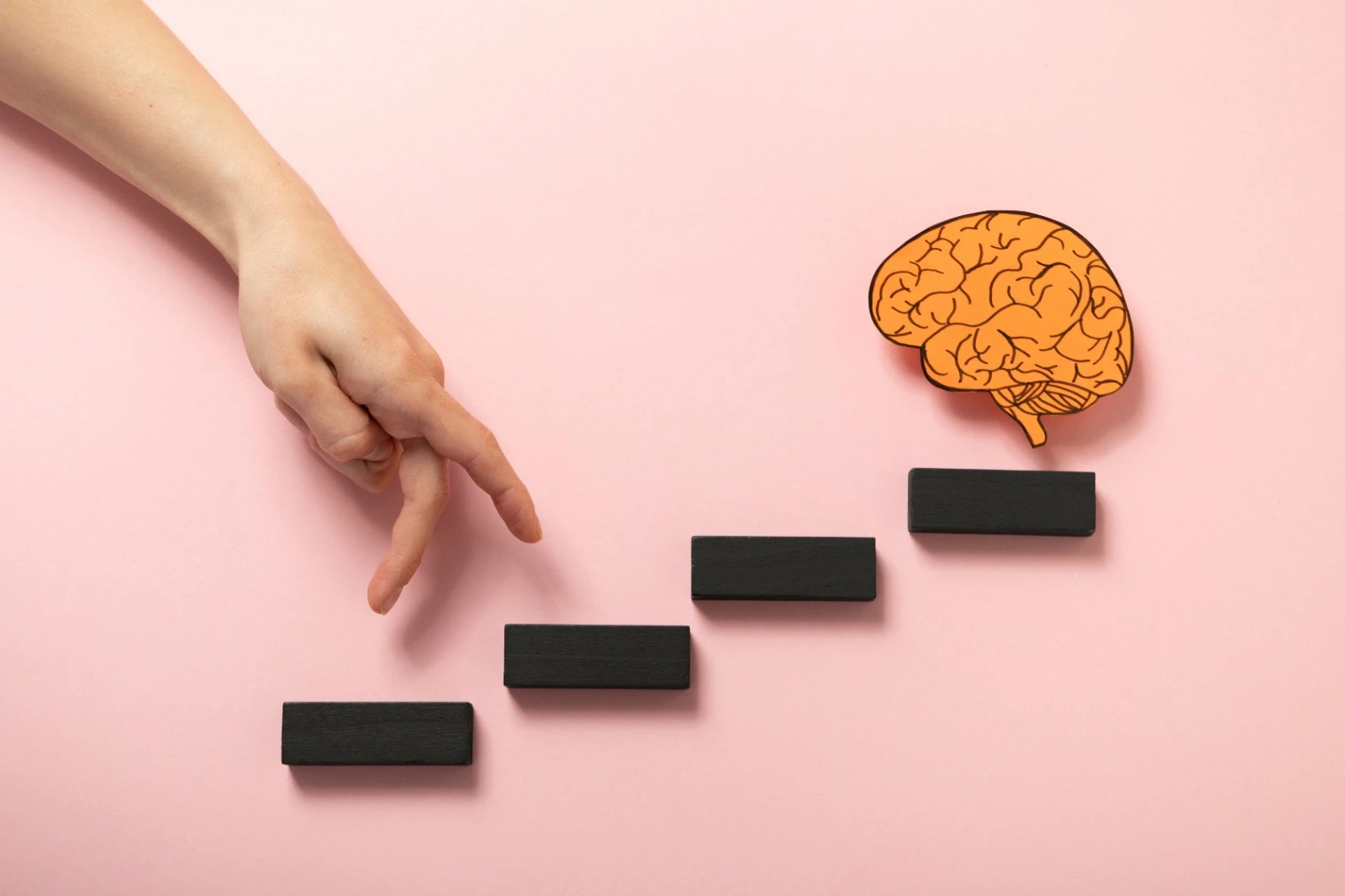
Mental performance refers to how you think, feel, and respond under pressure, and how that affects execution. It explains why some people perform at their best when it matters most, while others struggle despite strong preparation.
In this guide, you’ll learn what mental performance is (and isn’t), how to improve mental performance using trainable mental skills, how mental performance coaching works, and practical drills you can start using today.
What Is Mental Performance?
Mental performance is the trainable ability to execute skills consistently in high-pressure situations. It governs focus, confidence, emotional control, and decision-making when stakes are high.
Why it matters under pressure:
Pressure narrows attention, increases emotional reactivity, and speeds up decision-making. Mental performance skills determine whether pressure sharpens performance or causes breakdowns.
What it looks like in real life:
- Mental performance in sports: Missing a shot, resetting quickly, and executing the next play instead of spiraling.
- Work: Blanking during a presentation, using a breathing reset and cue word, and regaining clarity.
- Academics: Feeling exam anxiety, slowing the body, and refocusing on the next question.
Mental performance is built from mental skills, and like physical skills, they can be trained with deliberate practice.
What Mental Performance Is NOT
Clearing up misconceptions prevents wasted effort and unrealistic expectations.
- Not just “staying calm.” Some tasks require higher energy or controlled intensity, not relaxation.
- Not toughness hype. Mental performance is not about grinding harder; it relies on evidence-based mental skills, not willpower alone.
- Not mental health therapy. Mental performance focuses on optimization for healthy individuals, not diagnosis or treatment of clinical conditions.
- Not supplements or vitamins. Some people search for “mental performance supplements” or “brain vitamins.” While nutrition can support overall health, mental performance is primarily built through skills and routines. If you’re considering supplements, treat it as a health decision and consult a licensed professional.
Quick Start (30-Second Action Box)
Start today:
- Pick one skill (focus or confidence).
- Do one 2-minute drill (breathing or cue words).
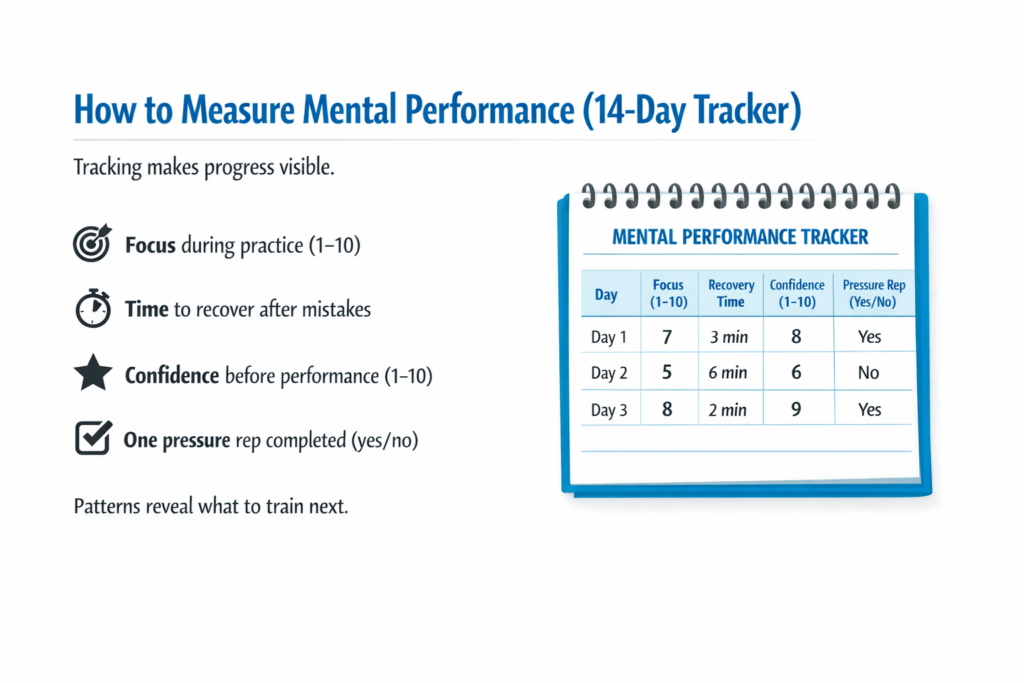
- Log it once.
Consistency beats complexity.
Core Components of Mental Performance
Mental performance is built from mental skills that you can train just like physical skills. These skills fall into foundational and supporting categories.
Foundational Skills
These stabilize performance in daily training and competition.
- Focus & Concentration: Directing attention to the task while filtering distractions.
- Confidence: Trust in preparation and ability, built through repetition and performance evidence.
- Mistake Recovery: Resetting quickly after errors instead of carrying them forward.
- Self-Talk: Using internal dialogue to guide attention and behavior under stress.
Supporting / Advanced Skills
These fine-tune performance in high-stakes moments.
- Emotional Regulation: Adjusting emotional intensity to meet task demands.
- Energy / Arousal Control: Raising or lowering physiological activation intentionally.
- Goal Setting & Routines: Turning preparation into automatic execution.
- Visualization / Imagery: Mentally rehearsing performance to strengthen neural readiness.
Skill → Pressure Breakdown → Drill Matrix
| Skill | What It Looks Like Under Pressure | Common Breakdown | Best 2-Minute Drill | Best 10-Minute Drill |
| Focus | Locked on next action | Mind jumps to outcome | 5 slow exhales + refocus word | Mindfulness reps (notice & return) |
| Confidence | Decisive execution | Hesitation after errors | Cue phrase: “Next play. Smooth. Eyes up.” | Instructional self-talk scripting |
| Mistake Recovery | Fast emotional reset | Carrying frustration | 3-step reset (Recognize–Release–Refocus) | Pressure simulations + recovery reps |
| Regulation | Optimal energy level | Over-amped or flat | Physiological sigh | Breathing + activation routine |
| Preparation | Calm readiness | Rushed starts | 2-minute imagery | Full PETTLEP-style imagery |
Technique Notes (Evidence-Based)
Physiological (Cyclic) Sigh
The physiological (or cyclic) sigh involves a double inhale through the nose followed by a long, slow exhale. Research from Stanford Medicine suggests this breathing pattern may help reduce short-term stress and support arousal regulation in pressure situations. It can be useful as an in-the-moment reset, but it is not a form of medical treatment or a substitute for professional care.
PETTLEP Imagery
PETTLEP imagery is a structured visualization model used in sport psychology. The acronym stands for Physical, Environment, Task, Timing, Learning, Emotion, and Perspective. Unlike generic visualization, PETTLEP emphasizes realism, mentally rehearsing skills in conditions that closely match actual performance to strengthen neural readiness and execution under pressure.
What Is Mental Performance Coaching?
Mental performance coaching is a structured process for developing psychological skills that support execution under pressure.
What a Coaching Session Looks Like
A typical mental performance session is structured yet personalized.
You’ll start with a check-in to identify current challenges and pressure points.
The coach guides you through targeted drills, routines, or imagery exercises.
Sessions end with reflection and action steps to apply skills in real-world performance.
What a Mental Performance Coach Does
Most programs follow a four-stage cycle:
- Assess: Identify mental strengths, gaps, and pressure triggers.
- Train: Build skills using drills, routines, and simulations.
- Monitor: Track progress through logs, sessions, and performance reviews.
- Refine: Adjust strategies as demands increase.
Who Benefits Most
- Athletes & performers: Competition pressure, confidence, mistake recovery.
- Executives & leaders: Decision-making and composure under stress.
- Students: Focus, test anxiety, memory retrieval.
Coach vs. Therapist (Credential Clarity)
Mental performance coaches focus on performance optimization, not clinical care. Some practitioners hold the CMPC (Certified Mental Performance Consultant) credential through the Association for Applied Sport Psychology (AASP). Not all effective coaches are CMPCs, and CMPCs do not provide therapy unless separately licensed.
How to Improve Mental Performance (Skills + Routines)
Improving mental performance requires routines that make mental skills usable under pressure.
Routines That Translate Skills into Performance
- Pre-performance routine: Breathing, imagery, and a focus cue.
- In-the-moment reset:
- Recognize tension or racing thoughts
- Release with breath or movement
- Refocus on the next controllable action
- Post-performance debrief: What worked? What broke? What to train next?
Foundations That Affect Mental Performance
Mental skills are harder to use when biological foundations are weak.
- Sleep & recovery: Consistent sleep timing supports attention, learning, and emotional regulation.
- Stress & energy management: Chronic stress impairs memory and focus; planned micro-rests protect performance.
What’s Another Word for Mental Performance?
Several related terms appear in search results, but they’re not identical:
- Performance mindset: Broad attitude toward growth and challenge.
- Mental toughness: Endurance and commitment under adversity.
- Performance psychology: The scientific field studying performance.
- Mental skills: The specific trainable components.
Mental performance integrates all of these into consistent execution under pressure.
FAQs
What is mental performance?
The ability to think, feel, and respond effectively under pressure.
What do mental performance consultants do?
They assess mental barriers, teach skills, build routines, and track progress.
How do you boost mental performance?
By consistently training focus, self-talk, and recovery routines under pressure.
Conclusion
Mental performance isn’t about talent or toughness; it’s about trainable skills, routines, and consistent practice under pressure. By developing focus, confidence, emotional control, and recovery strategies, you can perform at your best when it matters most. Use drills, trackers, and coaching techniques to turn these skills into habits that stick. Start small, stay consistent, and watch your performance improve, because mental performance is something you can build, just like any other skill.